
Foreign body in the stomach and intestines of a dog and cat – Gdańsk 24h
Did your dog swallow a sock, a bone, or a toy? Did your cat play with a thread?
Don’t wait for vomiting to occur. If the foreign body is still in the stomach, we can often remove it without opening the abdomen – using an endoscope. Once it has moved to the intestines, surgery is usually required.
Content author: veterinarian Małgorzata Szczepańska
How is a foreign body removed from the stomach and intestines?
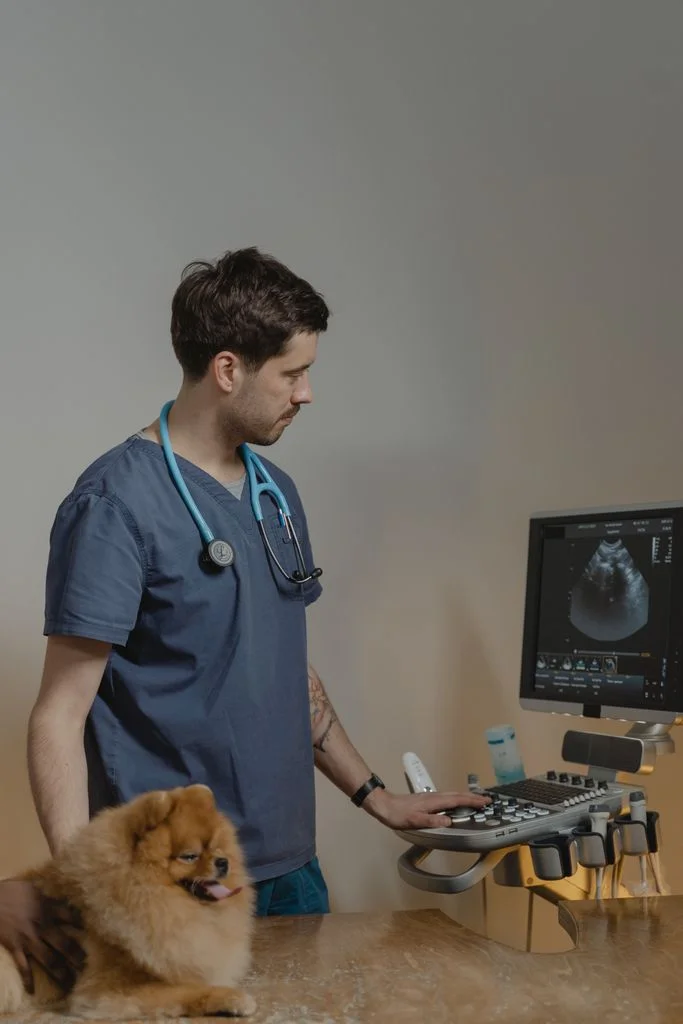
First, we determine where the foreign body is – through X-ray and ultrasound examination. If it is in the stomach, we try to remove it under anesthesia using an endoscope, without cutting the abdomen.
When the foreign body has moved to the intestines, is too large or sharp, or has damaged the wall of the gastrointestinal tract, abdominal surgery is necessary.
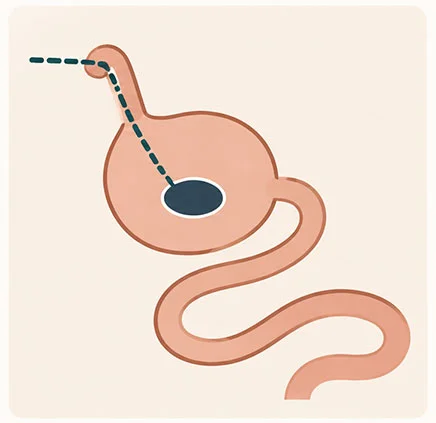
Illustrative diagram. Created by AI.
The location of the foreign body determines the treatment
Foreign body in the stomach
If the foreign body is still in the stomach, in many cases we remove it using an endoscope through the mouth, without cutting the abdomen. That is why it is so important to come quickly – over time, the foreign body may move to the intestines.
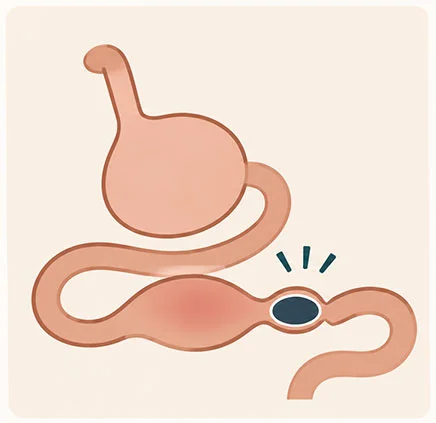
Illustrative diagram. Created by AI.
The location of the foreign body determines the treatment
Foreign body in the intestine
A foreign body stuck in the intestine causes obstruction: vomiting, loss of appetite, and abdominal pain. We remove it surgically through an incision in the intestine. If the intestinal wall is damaged, we remove a segment and stitch the healthy ends.
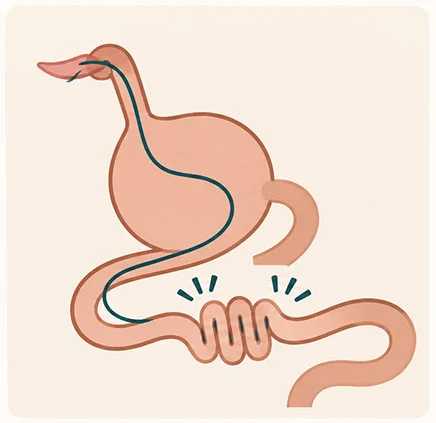
Illustrative diagram. Created by AI.
The location of the foreign body determines the treatment
Linear foreign body
A thread, string, or fishing line gets caught, for example, under the tongue or in the stomach, and the intestines crinkle around it like an accordion. Such a thread can cut through the intestinal wall. Never pull on it – urgent diagnostics are needed, and usually surgery.
Without opening the abdomen – when the foreign body is in the stomach
Under general anesthesia, we introduce a flexible endoscope with a camera through the mouth. The doctor sees the foreign body on the screen and removes it with special tools: forceps, a loop, or a basket. At the same time, he assesses whether the wall of the esophagus and stomach is damaged.
Without a wound on the abdomen
A lump the size of a pea or larger
Faster recovery
Lasting for a month or longer
Less pain
No stitches and no surgical wound to heal.
Not always possible
A gastroscope cannot remove a foreign body that has passed into the intestines, is very large, sharp, or deeply embedded in the stomach wall. If removal is unsuccessful, the surgeon may perform surgery – we discuss this with you before the procedure.
88%
foreign bodies from the esophagus and stomach were successfully removed endoscopically in 92 dogs and cats (Maggi et al., 2023).
Go immediately if:
- your pet is vomiting several times or cannot keep water down
- swallowed a battery, several magnets, or a sharp object,
- stopped eating, is apathetic, has a painful abdomen,
- you see a thread under the cat’s tongue or near the anus
What not to do
- Do not induce vomiting without consulting a veterinarian – sharp or large objects can damage the esophagus.
- Do not pull on the thread, string, or fishing line – you could cut the intestine.
- Do not give food or laxatives “to push it through”.
What dogs and cats most often swallow
Choose to see why this is dangerous and how we usually proceed. The method is always chosen by the veterinarian after examination.
Socks, gloves, cloths
soft, but not digestible
Why is it dangerous
The fabric does not dissolve in the stomach and easily blocks the intestine. It is often not visible on X-rays.
How we usually proceed
We usually remove it from the stomach with an endoscope. If it has passed into the intestine – surgery.
Corn Cobs and Bones
also chews and hard treats
Why is this dangerous
Sharp bones can damage the esophagus, stomach, and intestines. Corn cobs often get lodged in the intestine.
How we usually proceed
Smaller bones in the stomach are often removed with an endoscope. A cob or bone in the intestine requires surgery.
Toys, Balls, Plastic
fragments of toys, caps, packaging
Why is this dangerous
Hard elements can block the pylorus or intestine. A ball that fits the diameter of the intestine completely blocks it.
How we usually proceed
We try to remove them from the stomach with an endoscope, from the intestine – surgically.
Threads, Strings, Fishing Lines, Rubber Bands
linear foreign bodies, including thread with a needle
Why is this dangerous
The intestine folds on the thread like an accordion, and the thread can cut through its wall. A needle on the thread can puncture the digestive tract.
How we usually proceed
Do not pull on the thread. Urgent imaging studies, usually surgery. A needle in the stomach can sometimes be removed with an endoscope.
Seeds, Stones, Acorns
e.g. peach and apricot pits
Why is it dangerous
A hard pit with sharp edges often gets lodged in the small intestine and causes an obstruction.
How we usually proceed
In the stomach – an attempt at gastroscopy. In the intestine – surgery.
Batteries and magnets
button batteries, several magnets at once
Why is it dangerous
A battery can chemically burn the wall of the digestive tract. Several magnets attract each other through the intestinal walls and can puncture them.
How we usually proceed
Very urgent removal – via gastroscopy if they are still in the stomach, and surgically if in the intestine.
What happens after arrival – step by step
1
Examination
We assess the general condition, hydration, and abdominal pain. We ask what and when the pet might have swallowed.
2
X-ray and ultrasound
We look for foreign bodies and signs of obstruction. Fabrics and plastics can be invisible on X-ray, which is why ultrasound is important.
3
Gastroscopy or surgery
The method is chosen based on the location and type of foreign body. The procedure is performed under anesthesia with full monitoring.
4
Post-operative care
After gastroscopy, the pet often returns home the same day. After intestinal surgery, it may remain under 24-hour care at the clinic.
5
Monitoring and diet
Easily digestible food in small portions, wound monitoring, and a follow-up visit.
What you should know
- The longer a foreign body remains in the intestine, the greater the risk of damaging its wall. Sometimes a segment of the intestine must be removed.
- Linear foreign bodies, such as threads, are more difficult to treat and often require extensive surgery.
- After intestinal surgery, the first few days are the most important – which is why the pet may remain under the clinic’s care.
After returning home
- feed small portions of easily digestible food as recommended,
- after surgery: a collar or clothing and walks only on a leash,
- keep socks, toys, and threads out of the pet’s reach.
Call if your pet is vomiting, not eating, is lethargic, or has a painful abdomen.
Interventional gastroscopy and abdominal surgery
- Dr. Małgorzata Szczepańska
- Dr. Marta Zielińska
- Dr. Ewa Zwierzyńska
Diagnostic gastroscopy for gastrointestinal diseases (gastroenterology) is performed by Dr. Ewa Zwierzyńska.



Questions about foreign bodies
Do you not know if your pet swallowed something?
If in doubt, call – we will help assess how urgent the visit is.
FAQ – questions and answers
Based on research
Maggi G. et al. (2023), Veterinary Sciences
Endoscopic removal of foreign bodies from the esophagus and stomach in 92 dogs and cats: effectiveness 88%, and early reporting to the doctor facilitated and shortened the procedure. – doi: 10.3390/vetsci10090560 →
Hayes G. (2009), Journal of Small Animal Practice
Analysis of 208 dogs and cats with foreign bodies in the gastrointestinal tract – symptoms, surgical treatment, and prognosis. – doi: 10.1111/j.1748-5827.2009.00783.x →
Hobday M.M. et al. (2014), Journal of Small Animal Practice
Comparison of linear and non-linear foreign bodies in 499 dogs – clinical presentation, treatment, and short-term outcomes. – doi: 10.1111/jsap.12271 →
Swallowed something? Time matters
Call and come in. The sooner, the greater the chance of removing the foreign body without surgery.