
A visit to the veterinarian does not have to be a stressful experience for the dog. Proper preparation can help them cope more calmly with examinations, touch, or other medical procedures. It is worth starting by showing the dog that the clinic does not have to be associated solely with unpleasant experiences.
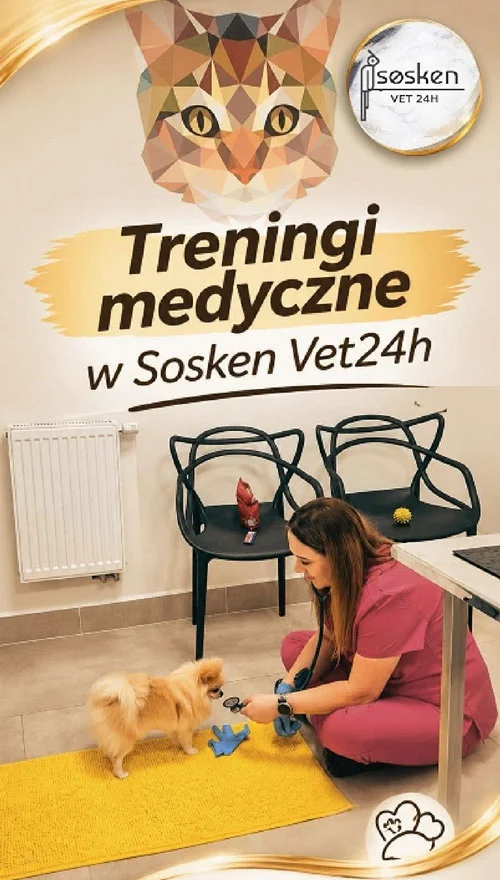
At Sosken Vet24h, we conduct medical training sessions during which we help dogs acclimate to the veterinary office and prepare for daily health care activities. We work on building a sense of safety, trust, and the ability to cooperate with the staff.
Who conducts the training?
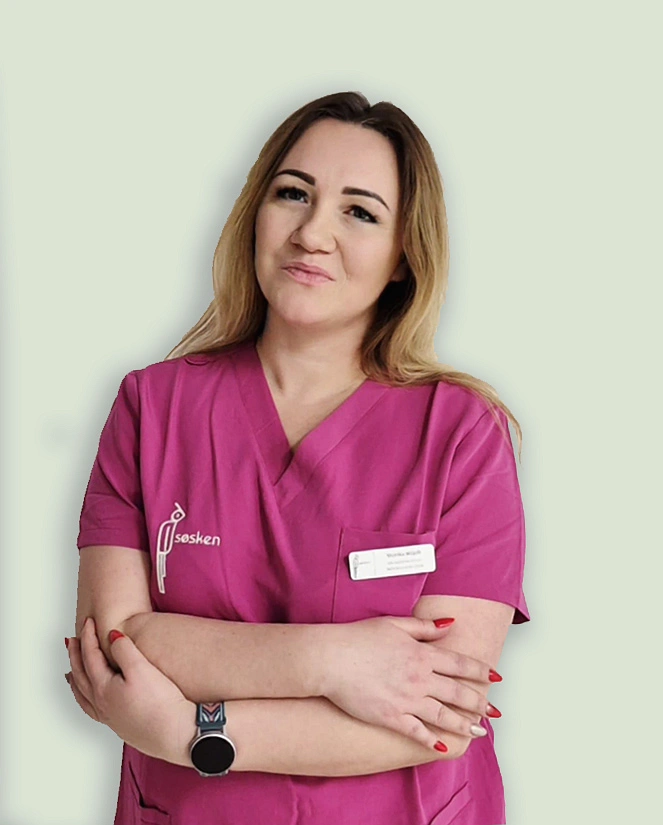
Monika Wójcik
dog behaviorist
Training is conducted by Monika Wójcik, a dog behaviorist, who has many years of experience and helps guardians better understand their pets’ behavior and cope with the difficulties that arise in their daily lives.
The entire medical staff of Sosken Vet24h is also involved in the process. This is important because we want the skills acquired during training to be applicable in practice, for example, during visits, examinations, and selected medical procedures.
For which dogs are the training sessions intended?
Medical training is intended for dogs of all ages. There is no need to wait until problems arise with visits to the veterinarian. It is worth preparing the dog from the first months of life.
We particularly recommend it for:
- puppies who are just getting to know the clinic and learning that a visit to the veterinarian can be a good experience,
- young dogs who need to learn calmness in the office,
- adult dogs who handle visits well but can still develop their cooperation skills during examinations,
- dogs that feel anxiety or fear before a visit to the veterinarian,
- dogs for whom touch, restraint, blood sampling, or other medical procedures are difficult.
Every dog has different experiences and needs. Therefore, we do not use a one-size-fits-all approach. The pace and scope of exercises are tailored to the individual dog, regardless of whether they are just starting to get to know the clinic or have already had difficult visits.
What do the medical training sessions look like?
1. Initial consultation
We start with a meeting with the guardian and the dog. We discuss previous experiences, get to know the dog’s behavior, and check which situations are the most challenging for him. Based on this, we establish an individual plan for further work.
2. Exercises at home
This is a very important part of the entire process. Before we start working in the clinic, the guardian receives specific instructions and exercises to perform with the dog at home.
In a familiar environment, it is easier to focus on learning new behaviors without additional stimuli related to the visit to the office. This is where we build the foundations that we will later use during the subsequent stages of training.
3. Adaptation sessions in the clinic
When the dog masters the basic exercises at home, we move them to the veterinary office.
Adaptation sessions take place at Sosken Vet24h and last about 15 minutes. During these sessions, the dog gets to know the clinic’s space, the staff, different types of touch, and selected medical procedures. Everything happens gradually, without haste, and taking into account the dog’s reactions.
4. Utilizing skills during veterinary visits
The final stage is to utilize the developed behaviors during actual visits. We want the dog to be able to use what he learned at home and during adaptation sessions.
That is why the medical staff is also involved in the training. Familiarity with the established methods allows us to better support the dog during examinations and other activities related to veterinary care.
Why is the guardian’s involvement so important?
Medical training does not end with a meeting with the behaviorist. A large part of the work takes place at home, during short, regular exercises with the guardian.
It is daily practice that helps reinforce new skills. The dog learns that he has an influence on the course of the exercises, and the contact with humans and the activities performed can be predictable and safe.
We are not just concerned with the dog allowing himself to be examined. We want to teach him cooperation and help him better navigate situations that are part of veterinary care.
Let’s ensure a good experience for the dog today. With proper preparation, the next visit to the clinic can be much easier for him.