
Eyelid surgery for dogs and cats in Gdańsk
A rolled-in eyelid irritates the eye with every blink. A rolled-out eyelid leaves it unprotected. A bump on the edge of the eyelid can irritate the cornea.
Eyelid surgery removes the cause of the problem so that the eye stops hurting and tearing.
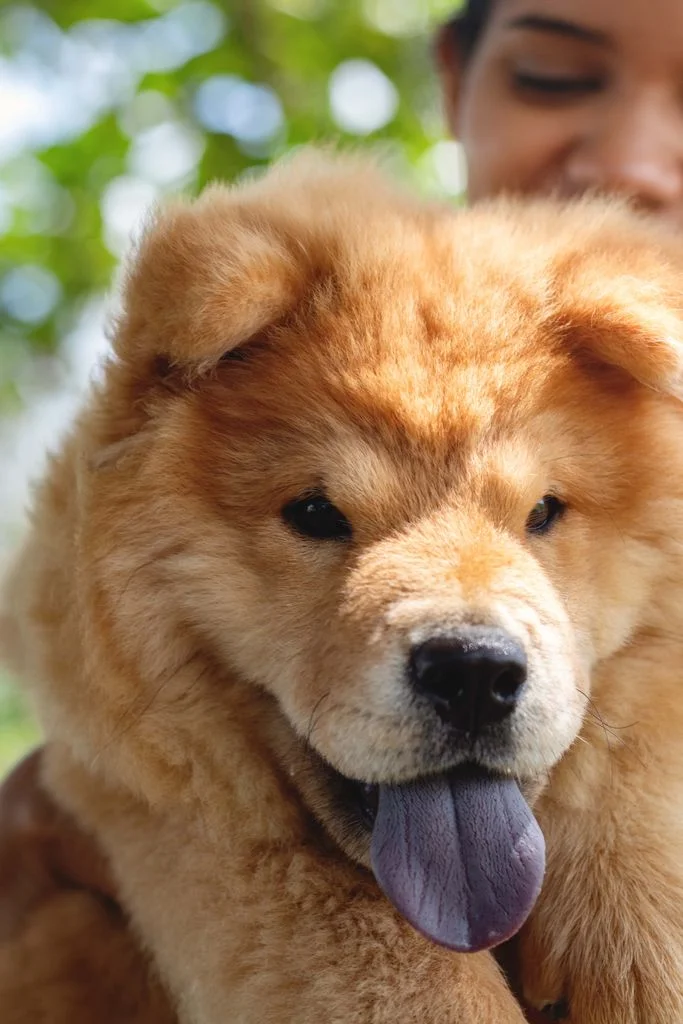
What is eyelid surgery for dogs and cats?
It is a surgical procedure that restores the proper position of the eyelid or removes a change from it. It is most commonly performed for rolled-in eyelids (entropion), rolled-out eyelids (ectropion), and for bumps on the edge of the eyelid.
The procedure is performed under general anesthesia. Usually, the pet returns home the same day. We most often use dissolvable stitches that do not need to be removed.
Most common eyelid problems
Select to see what the eye looks like and how we treat it.
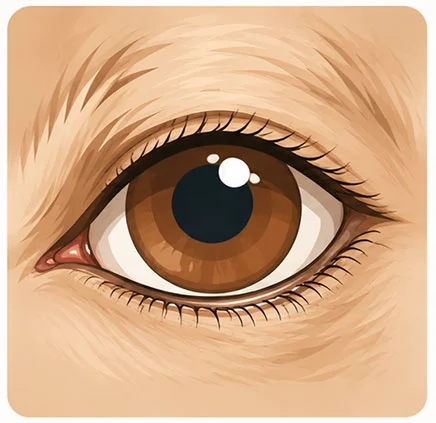
Illustrative diagram. Created by AI.
Properly positioned eyelids
The eyelid edge adheres to the eyeball, and the eyelashes and fur are directed outward. The eyelids evenly distribute tears and protect the cornea.
What you will notice
The eye is shiny, without tearing and redness.
How we treat
Regular check-ups are sufficient, especially for breeds in the risk group.
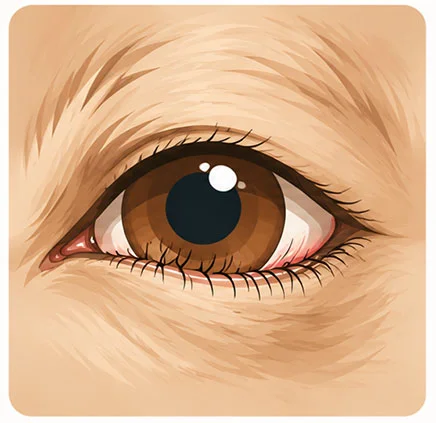
Illustrative diagram. Created by AI.
Entropion
The eyelid edge, most often the lower one, rolls inward. The fur and eyelashes rub against the cornea with every blink, which over time can lead to ulceration.
What you will notice
Tearing, squinting, paw rubbing, redness, corneal opacity.
How we treat
Surgical removal of the strip of skin under the eyelid (e.g., Hotz-Celsus technique). In puppies, sometimes temporary stitches first.
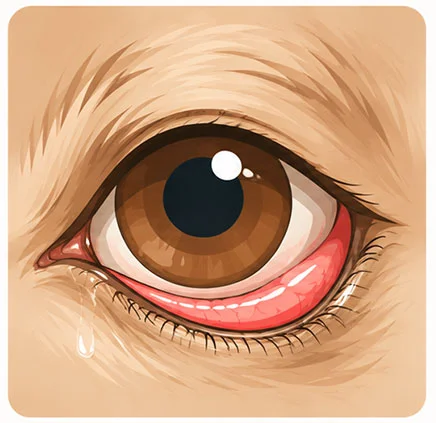
Illustrative diagram. Created by AI.
Ectropion
The lower eyelid droops and turns outward, exposing the red conjunctiva. The eye is less protected and more prone to chronic conjunctivitis.
What you will notice
Visible red conjunctiva, discharge, secretion, recurrent inflammations.
How we treat
In mild cases, conservative treatment. In recurrent problems, surgical shortening of the eyelid.
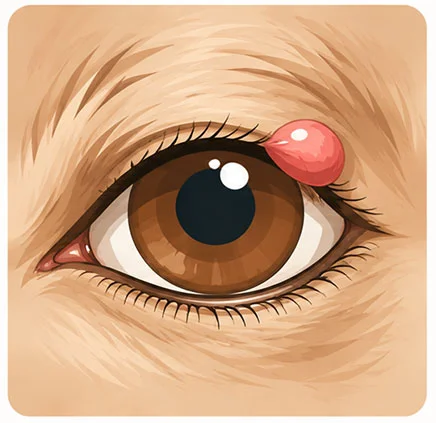
Illustrative diagram. Created by AI.
Nodes on the eyelids
In dogs, these are usually benign changes of the sebaceous glands (Meibomian). However, a growing nodule can irritate the cornea, bleed, or ulcerate. In cats, changes on the eyelids are more often malignant.
What you will notice
Growth on the eyelid edge, tearing, rubbing of the eye, bleeding from the lesion.
How we treat
Wedge resection of a portion of the eyelid or removal of the lesion with a CO₂ laser, followed by histopathological examination.
Is your pet at risk?
Eyelid positioning problems are often hereditary and related to head structure. These breeds should be monitored from puppyhood.
Entropion – inward rolling
Ectropion – outward rolling
Cats
Entropion occurs more frequently in Persian cats and other breeds with flat faces. In older cats, it may also appear secondarily, e.g., after weight loss or chronic eye inflammation.
How treatment proceeds – step by step
Good eyelid plastic surgery starts with a thorough examination. Sometimes the eyelid rolls in simply because the eye hurts for another reason, and then surgery is not necessary.
1
Eye examination
Corneal evaluation with dye (fluorescein test), measurement of tear quantity, and assessment of eyelids after local anesthesia of the eye.
2
Surgery Plan
In puppies that are still growing, we sometimes first place temporary sutures to support the eyelid, and the final correction is performed later.
3
Procedure
Under general anesthesia, we remove excess skin or a lesion on the eyelid and place delicate sutures. For nodules, we may use a CO₂ laser.
4
Recovery and Follow-up
Usually discharged the same day. Follow-up after a few days. Sutures are usually absorbable, so they do not need to be removed.
What to Know Before the Procedure
- The surgeon intentionally removes rather too little than too much skin, as excessive correction can turn the eyelid inside out. Therefore, sometimes a small adjustment is needed.
- In dogs that are still growing, especially in shar-peis and chow chows, the appearance of the eyelids changes with age. The final procedure is planned after growth has finished.
- In dogs, nodules on the eyelids are usually benign, while in cats they are more often malignant. Therefore, every removed lesion is sent for histopathological examination.
Post-Eyelid Surgery Care
Collar at all times
Until the wound is fully healed (usually 10–14 days), even at night. One scratch with a paw can tear the suture.
Drops and ointment as prescribed
Administer them at regular intervals. Take a few minutes break between different drops.
Harnesses instead of collars
They do not pull on the neck and do not increase pressure around the head. Walks only on a leash.
No play with other dogs
To heal the wound, avoid pushing, rolling around, and bushes.
Call immediately if:
- the pet squints its eye or does not want to open it,
- the eye has become cloudy or there is purulent discharge,
- the suture has come apart or the wound is bleeding,
- the eyelid has swollen significantly after 2–3 days.
Ophthalmic procedures at Sosken


Questions about eyelid plastic surgery
Don’t know if your pet’s eye needs surgery?
Call or schedule an examination.
FAQ – questions and answers
Based on research
Read R.A., Broun H.C. (2007), Veterinary Ophthalmology
Correction of entropion in dogs and cats by combining the Hotz-Celsus technique with a wedge resection of the lateral part of the eyelid – results from 311 eyes. – doi: 10.1111/j.1463-5224.2007.00482.x →
Diagnosis and Treatment of Eyelid Tumors, Today’s Veterinary Practice
Research overview: eyelid tumors in dogs are several times more likely to be benign than malignant, while in cats, malignant changes prevail. – todaysveterinarypractice.com →
A tearing eye is not just a cosmetic issue
Untreated entropion can damage the cornea. Schedule an examination before an ulcer develops.